January is Cervical Cancer Awareness Month. People experiencing homelessness are up to four times more likely to be diagnosed with, or to die from, cervical cancer than those who are housed. This disparity is preventable. Cervical cancer is both preventable and treatable when caught early through screening.
In our surveys and interviews with people experiencing homelessness in Indiana, we found that the vast majority want to be screened and believe it is important for their health. Despite this strong desire, nearly half of those surveyed have missed their screenings and are overdue for cervical cancer tests.
Barriers to screening included logistical challenges such as insurance issues and transportation, discomfort from screening procedures, a history of trauma, mistrust—or mistreatment—by healthcare providers, and the overwhelming stresses of homelessness.
Awareness of cervical cancer risk, the importance of early detection, screening procedures and how to access screening were mentioned as facilitators. Other facilitators included screening reminders from providers, incentives (e.g., gift cards), community outreach (e.g., health fairs), and having a support person to accompany them.
While no framework exists for routine screening strategies in homeless shelters or community health clinics, HPV self-sampling and the inclusion of community health workers are strategies that have been successful in improving screening access. Community health workers can not only serve as connectors to community and health resources but can provide the education that people experiencing homelessness are looking for.
Most people experiencing homelessness we spoke with were willing to try HPV self-sampling because of the privacy, convenience, and comfort it offers, as well as the sense of empowerment it provides in taking control of their health.
Not everyone is interested in HPV self-sampling. Some prefer to be screened by a healthcare provider, while others would consider it if a healthcare professional showed them how to do it.
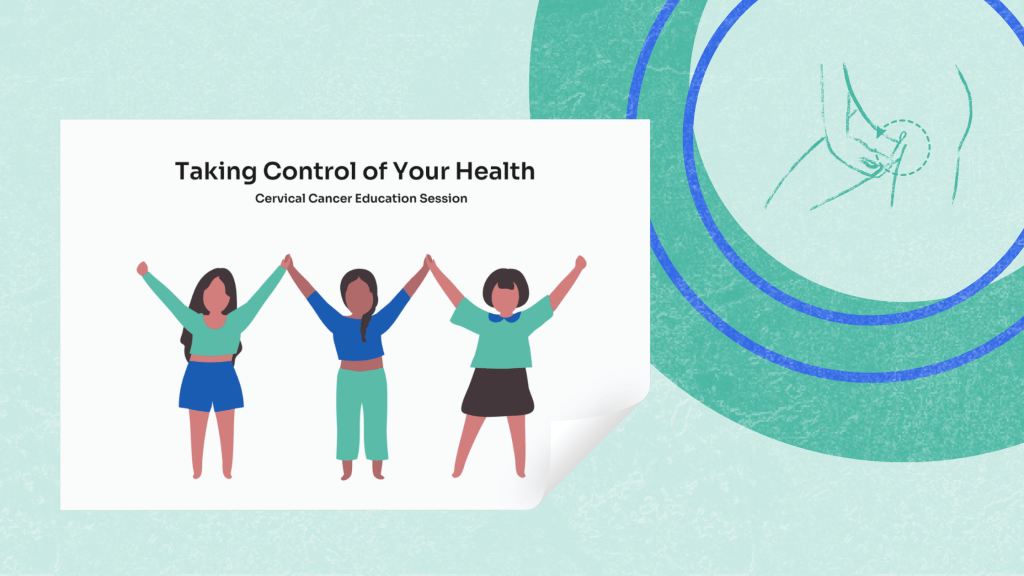
Taking all of this into account, our community health workers will offer individual cervical health education sessions to people experiencing homelessness at two shelters in Indiana. Participants will learn about cervical cancer, screening, HPV self-sampling and given the opportunity to get connected to a provider for screening AND/OR take an HPV test right there at the shelter. Through this, we hope to learn how the program impacts knowledge, attitudes, and screening behaviors related to cervical cancer, and to apply lessons learned to other preventive healthcare initiatives for people experiencing homelessness.
This program begins in just two weeks! The development and ongoing evolution of this project have truly been a community effort. We couldn’t do this without our amazing partners: Women’s Health Advisory Board, LTHC Homeless Services, Horizon House, and YWCA, the funding from the NIH, and, of course, the people experiencing homelessness who have trusted us with their stories. We thank you and hope to serve you well.
 Health TechQuity Lab