
As the name suggests, co-design stands for collaborative design — a process that tends to be a longer-term and deeper form of collaboration with the people who will use, deliver, or engage with technology than other human-centered or participatory design methods. In our latest Human-Centered Design for Health Seminar Series, Anastasia Kouvaras Ostrowski, Assistant Professor of UX Design at Purdue University, shared her experience on a multi-year co-design project with older adults to understand long-term experience with social robots aimed to promote emotional wellbeing. Through this experience, Anastasia shared some of her best practices of co-design and answers to some of her most frequently asked questions.
Best Practices:
Support people in co-design processes through their lived experiences with the technology being designed. For example, in Anastasia’s work, participants lived with a robot for an extended period while researchers visited to provide support and address concerns as they arose. This allowed participants to deeply engage with the technology and have their perspectives and design priorities shaped by real-world use.
Provide a diverse set of design activities to engage participants such as art-based exercises, prototyping, and design guideline generation sessions. Some may be more familiar with certain activities than others. Be flexible and responsive to participants’ needs and preferences during the co-design sessions, rather than rigidly following a pre-determined plan. Employ a mix of divergent and convergent design processes to allow for open-ended exploration as well as convergence on specific design decisions.
Foster shared planning and decision-making. In co-design, the participants are involved in planning different aspects of the process and making key design decisions, not just providing feedback. In their final activity of design guideline generation, participants identified a feature list for the continued design of this product — many of which were informed by their firsthand experiences living with the robot. For example, participants suggested giving the robot a personalized name and making it more socially aware so it wouldn’t interrupt their conversations with others.
Cultivate long-term, respectful, and mindful commitments and relationships between researchers and participants. Four years after Anastasia’s co-design project, researchers still engage with participants every month, sometimes to share updates on study design and development, or enrichment activities like seminars with visiting scholars.
FAQs:
How should I get started collaborating with people for participatory design/co-design work? It’s important to communicate your intent with potential partners. Clearly document expectations and establish mutual agreement document that outlines not just what are you are going to grain from his relationship, but how the community will benefit.This can take time, but it helps build trust.
How do I think about participant compensation? While monetary compensation is ideal in many cases, in some, it may not be possible and there are other ways to compensate participants. It’s important to ensure compensation is mutually agreed upon upfront, and that participants feel their time and involvement are valued.
How many people do I need to engage with? It depends on your goals and resources. It is qualitative work after all, so the goal is not to be generalizable – it’s to gather insights from the community. Also, remember that this work is iterative. If you run one workshop it doesn’t mean you have to stop there. You can do one later if that’s what makes sense for your project.
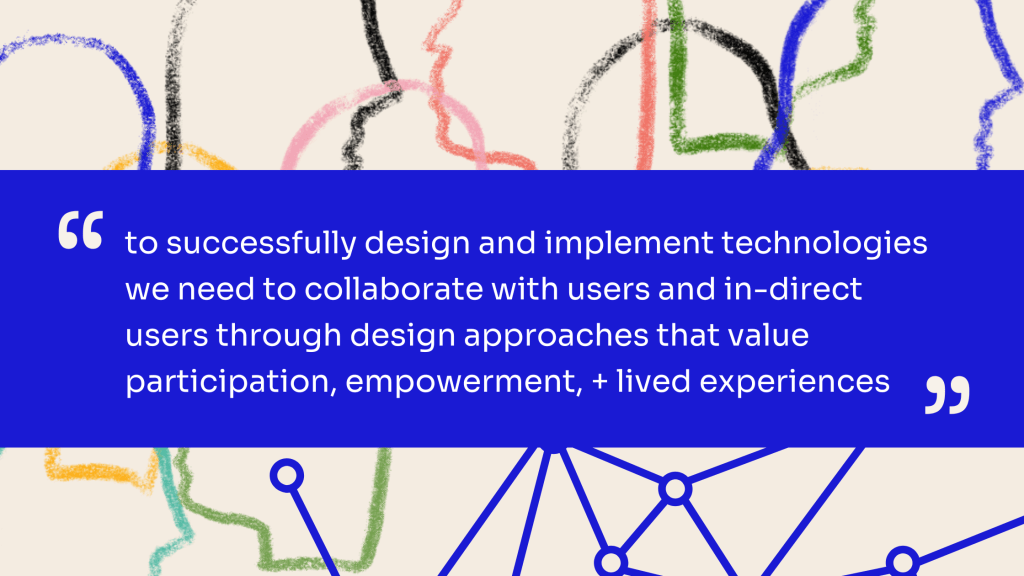
Anastasia Ostrowski reminds us that “to successfully design and implement technologies, we need to collaborate with users and in-direct users through design approaches that value participation, empowerment, + lived experiences.” This highlights the importance of co-design in creating meaningful technology that truly reflects and serves the needs of its users and community.
To learn more about Anastasia’s work on long-term co-design visit her website.
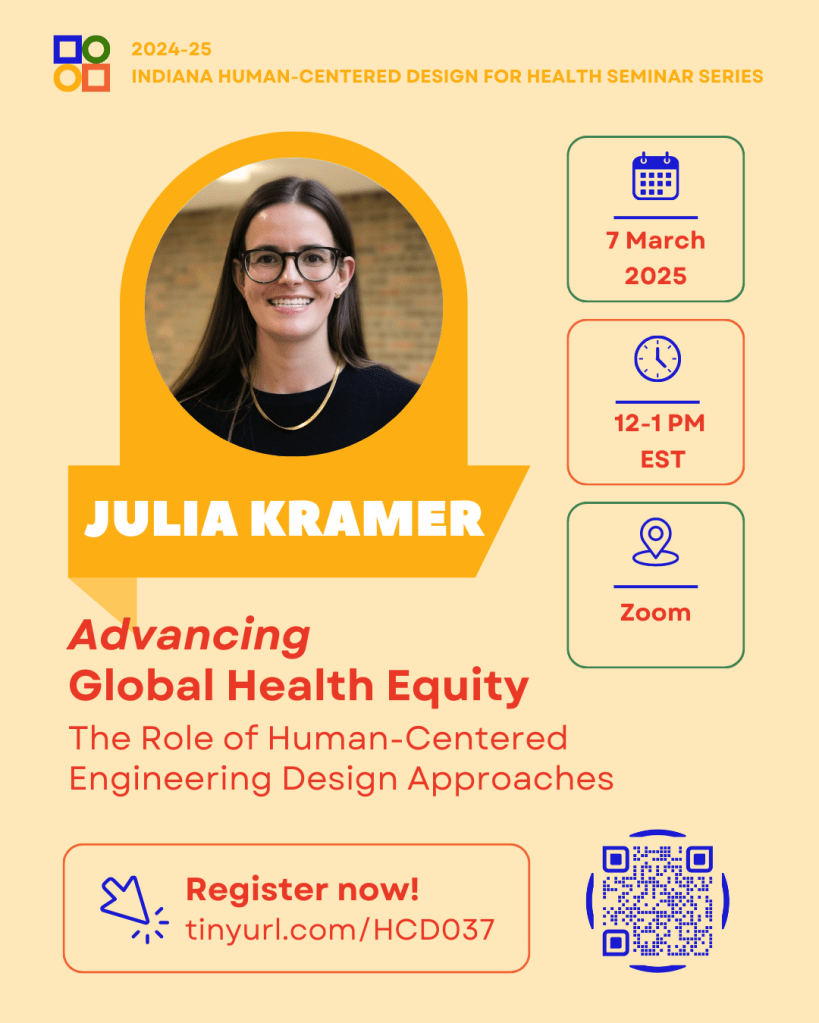
As we explore more practical applications of HCD in health, we invite you to join us on March 7th for our next seminar with Julia Kramer, Assistant Professor at the University of Michigan and Director of the Engineering, who will discuss how engineering design can and should contribute to advancing global health equity.
 Health TechQuity Lab