
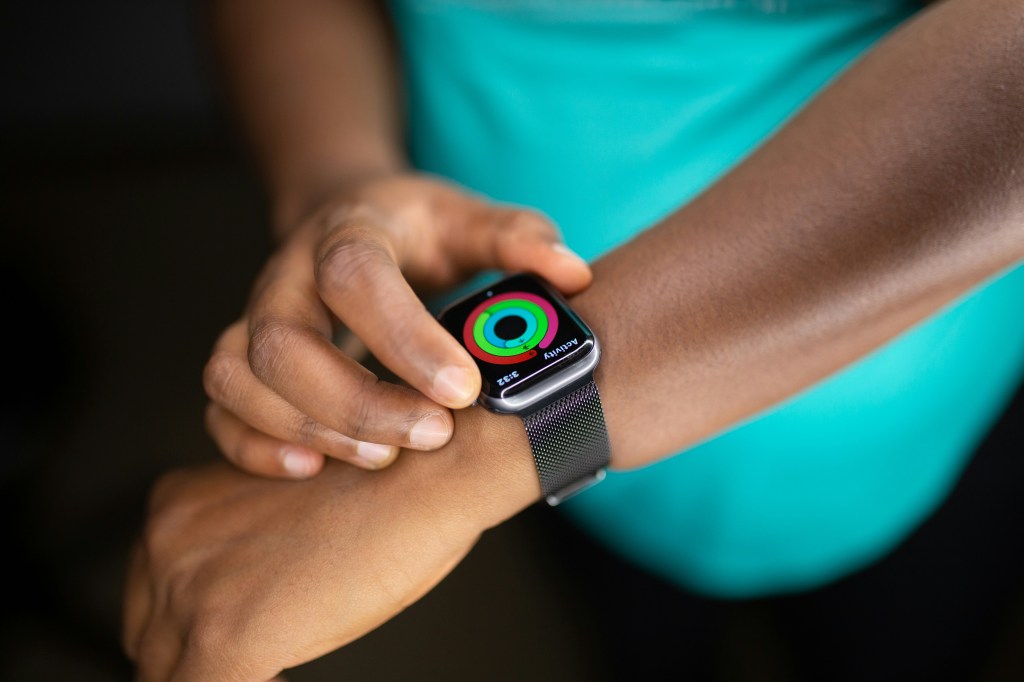
Secretary Robert F. Kennedy Jr. has declared wearable health technology as a pillar of his “Make America Healthy Again” (MAHA) agenda. His vision suggests that tracking personal data — glucose levels, heart rate, sleep cycles, and more — will empower Americans to take charge of their health and, in turn, reverse the country’s dismal health statistics.
As biomedical engineers, we believe deeply in the promise of technological innovation to improve lives. But as public health and healthcare professionals, we also know that wearables, no matter how sophisticated, won’t fix what’s fundamentally broken in our health system. Worse, by placing the burden of health on individuals and their gadgets, as opposed to underlying root causes of disease, we risk deepening the health disparities and chronic disease outcomes that MAHA proposes to address.
The United States spends more per capita on healthcare than any other nation, yet has some of the worst health outcomes in the developed world — from life expectancy to maternal mortality. It’s tempting to look for high-tech silver bullets to explain and solve this paradox. But the truth is far less glamorous and far more urgent: Our national health crisis stems from decades of underinvestment in the social and environmental conditions that shape people’s ability to live healthy lives.
Take the continuous glucose monitor, a popular wearable among those trying to manage or prevent diabetes. It can provide real-time feedback about how your body responds to food, exercise, and stress. But what good is that information if you live in a food desert without access to fresh produce? If you’re juggling multiple jobs with no time to cook, let alone exercise? If your neighborhood lacks sidewalks, or your housing is infested with mold that triggers your asthma? If you can’t afford to see a doctor, let alone buy insulin.
The fantasy of the self-optimized individual — armed with a smartwatch and unlimited willpower — makes for great marketing. But it ignores the bedrock truth of public health: that health is made in communities, not in apps. Clean water, clean air, stable housing, safe neighborhoods, quality schools, healthy food, accessible clinics, affordable childcare, a living wage — these are the factors that actually determine how long and how well people live.
RFK’s vision of a wearable-first approach ignores systemic failures and distracts from the government’s responsibility to address the root causes of poor health. Framing health as a personal responsibility problem — solvable by monitoring your vitals — assumes that if individuals just had more information, they would make the right choices. But knowledge is not power when people lack the means to act on it.
Of course, technologies like wearables and AI can play a transformative role in health — the ability to remotely monitor heart rate, breathing rate and temperature could signal a severe infection or a prenatal complication and send someone to the hospital early enough for treatment. Detecting falls in the elderly and opioid overdoses could send lifesaving medical support. But current systems of care have no infrastructure or incentive to provide the oversight needed to make these continuous data actionable. In addition, when there is no hospital available to take someone to (12% of rural women do not live within an hour’s drive of a hospital and there is no doctor available in the entirety of 8% of rural counties in the US), these early indicators are useless.
When the federal government starts positioning wearables as a central strategy for improving national health, we should be asking harder questions. Who benefits? Who gets left out? And what deeper issues are we ignoring? Wearables may help some people improve their health habits. But they will never substitute for the public investments this country has long neglected. A truly healthy America will be one where a child’s ZIP code doesn’t determine their life expectancy. Where rural hospitals aren’t shuttering. Where people aren’t skipping doctor visits or rationing insulin because they can’t afford them.
If MAHA is to mean anything at all, it must begin not with wristbands and apps, but with a national commitment to the basics: healthy communities and affordable care for all.
—
Natalia Rodriguez, PhD, MPH
Associate Professor of Public Health and Biomedical Engineering at Purdue University
https://hhs.purdue.edu/directory/natalia-rodriguez/
Jacqueline Linnes, PhD
Associate Professor of Biomedical Engineering at Purdue University
https://engineering.purdue.edu/BME/People/ptProfile?resource_id=119757
Steven Steinhubl, MD
Professor of Biomedical Engineering at Purdue University
https://engineering.purdue.edu/BME/People/ptProfile?resource_id=273295
 Health TechQuity Lab