This Cervical Cancer Awareness Month, we want to highlight important progress: HPV self-sampling is now recognized in major screening guidelines, offering a new way to increase access to cervical cancer screening and advance health equity.
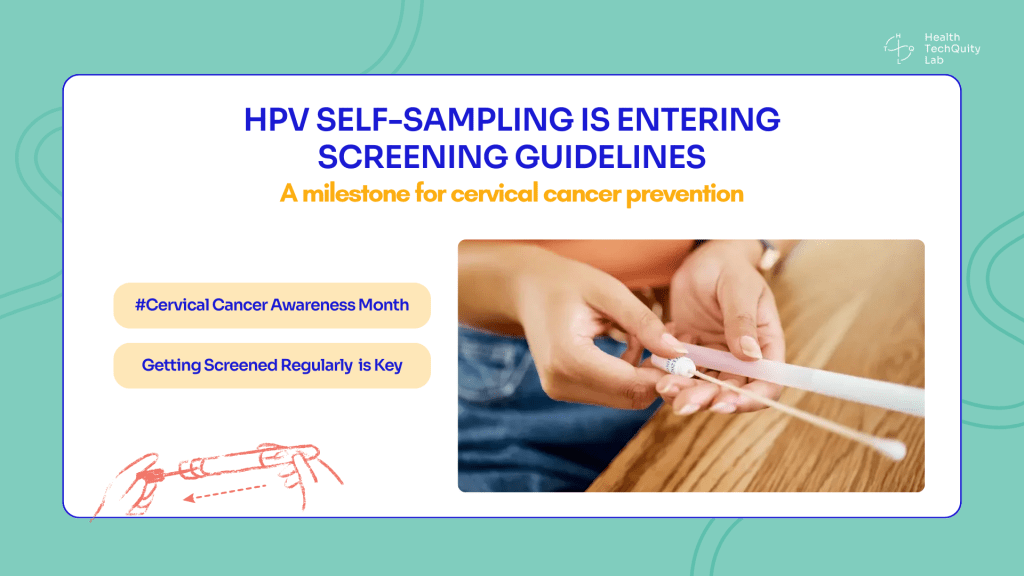
The American Cancer Society and the federal Women’s Preventive Services Guidelines now include self-collected HPV testing as an appropriate option for people ages 30–65 at average risk.
This approach allows individuals to collect their own vaginal sample for HPV testing without a pelvic exam, providing a valid alternative to clinician-collected tests and helping reach people who face barriers to traditional clinic-based screening.
Why expanding screening options matters
Regular cervical cancer screening is one of the most effective tools for early detection and prevention. However, many people encounter obstacles that make traditional screening difficult, including:
- Discomfort with pelvic exams
- A history of sexual trauma
- Transportation, time, or caregiving constraints
Our research with people experiencing homelessness echoes these challenges and suggests that HPV self-sampling is one way to address them, particularly for those who are under-screened or never screened.
For many, self-sampling reduces barriers to screening and makes cervical cancer prevention more accessible. While it is not yet available everywhere, and coverage varies by location or insurance plan, the inclusion of HPV self-sampling in clinical guidelines is a key step toward equitable access and the elimination of cervical cancer.
Learn more:
ACS update: https://www.cancer.org/cancer/risk-prevention/hpv/hpv-and-hpv-testing/self-collection.html
Women’s preventive services guidelines update: https://www.federalregister.gov/documents/2026/01/05/2025-24235/update-to-the-womens-preventive-services-guidelines
 Health TechQuity Lab