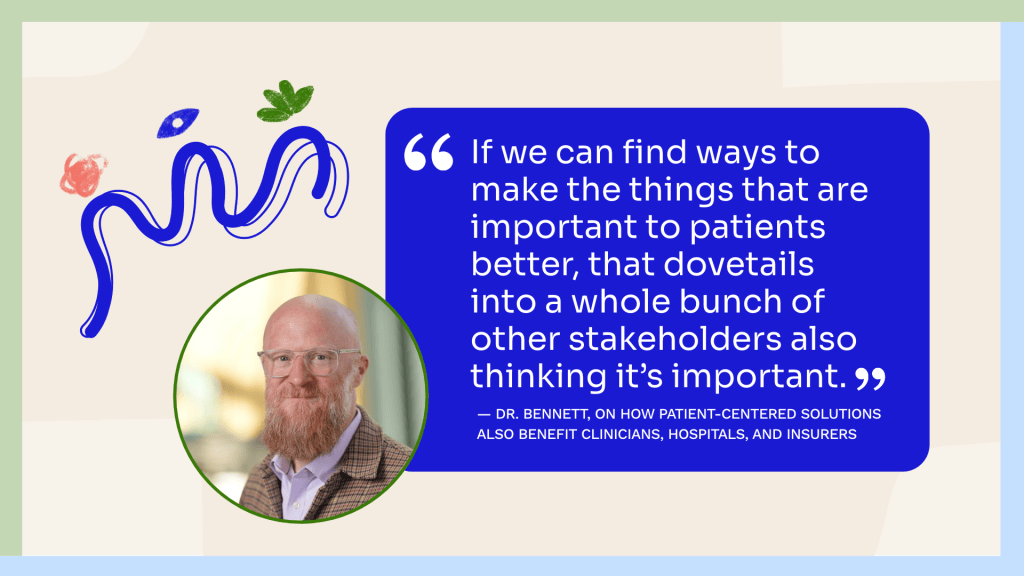
To kick off the first session of our HCD seminar this year, Dr. William E. Bennett (or “Billy”) walked us through his experience with human-centered design as a pediatric gastroenterologist (or “poop doctor”) and the impact it has had on his research and patients.
The DECADES Project: Integrating mental health care into GI clinics. Many children and young adults with chronic GI pain also experience anxiety or depression, and clinicians would typically refer them out to a psychologist or therapist. Billy wondered if integrating separate mental health and GI care processes would be beneficial to patients, but some colleagues thought families would be insulted if mental health came up during a GI visit. He turned to Research Jam to find out from patients and families directly.
A different story unfolded: families weren’t hesitant about discussing mental health in GI clinics at all, and some were frustrated that mental health wasn’t being addressed enough. They identified the need for and helped select imagery that explained the connection between the gut and the brain, which was then shown alongside screening forms. In the trial that followed, patients who were positive for mental health screening and met with a psychologist immediately after their GI visit, had improved GI symptom scores six months later, compared to those referred out per usual care.
Improving the diagnosis and support experience for families affected by a rare genetic disorder. Families of children with Phelan-McDermid syndrome described genetics visits that felt generic, with little specific information about their child’s condition. In a project funded by a PCORI Engagement Award and led with Research Jam, families mapped their experiences with genetic counselors and then co-created strategies to improve them. Activities like “love letter and breakup letter” to their geneticists surfaced how emotional these encounters can be, and how poor communication and lack of preparation and empathy can erode families’ trust.
A key finding was that families ranked empathy and caring as the most important quality of a good clinician. As Billy noted, most doctors are competent; what separates a good one from a bad one is whether they care. The Phelan-McDermid Syndrome Foundation acted on the findings, updating its website with recommendations from the sessions and working with clinical labs so that diagnostic results link families to community resources.
Changing clinical practice because of HCD. Billy described how HCD has changed the way he sees patients and research. For research, he believes the people affected should help design the key elements of a study and even help choose which problems to study. In clinical practice, his values center on relationship building, sufficient visit time, flexibility, and shared decision-making with patients and families. Borrowing Research Jam’s motto of “always be jamming,” he engages with patients and families beyond the medical problem to elicit what they may not say outright and build and maintain a trusted relationship. He’s learned to recognize that his assumptions of what patients want and his anecdotal experience may be wrong for that individual. That means staying flexible when a patient wants to try something, as long as it won’t cause harm, and ensuring they feel that they have a role in their treatment plan.
During the Q&A, Billy addressed three main questions:
- How to turn patient input into system change. For patient-designed solutions to be adopted and paid for, they need to be rigorously studied. Building the evidence base moves systems.
- How to make the case for human-centered design. Whether pitching to funders, clinicians, or early-career researchers, the most convincing case for HCD is demonstrating its results in an area people care about and emphasizing that it goes beyond just asking people’s opinion and includes them in designing solutions.
- What to do when there’s no solution to a patient’s problem. Break the larger goal into achievable steps. Journey mapping can help identify barriers and build a roadmap toward the desired outcome, recognizing that incremental progress can still help patients and benefit others facing similar challenges.
Billy’s talk reminds us that designing better health systems starts with getting to know the people they serve, and that small acts of care and preparation can go a long way.
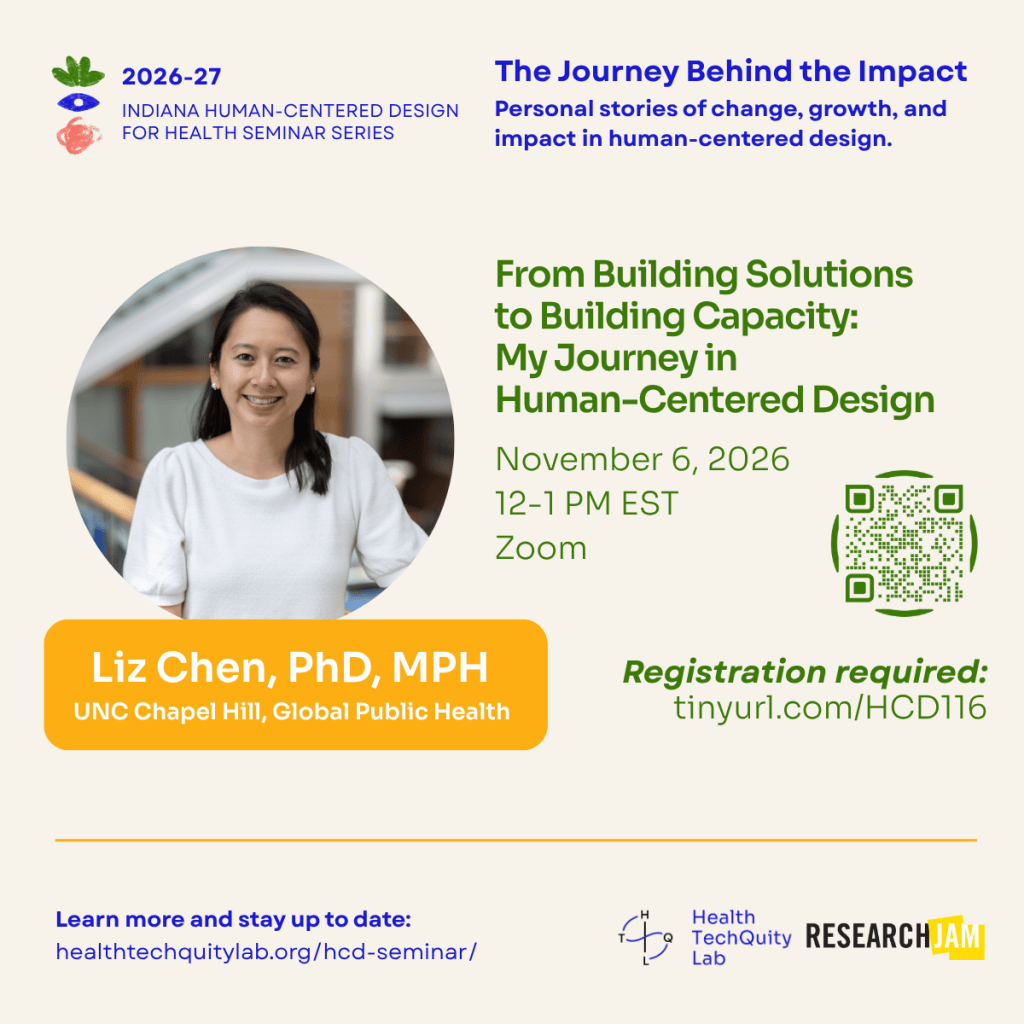
We’ll continue exploring “the journey behind the impact” on Friday, November 6 with Dr. Liz Chen, Associate Professor of Health Behavior at UNC-Chapel Hill’s Gillings School of Global Public Health, who will share how her own work evolved “From Building Solutions to Building Capacity: My Journey in Human-Centered Design.” Register to attend!

